


It's Sunday night, the order window closes tomorrow, and you're staring at the hot lunch menu on your phone. Chicken rice bowl. Chicken wrap. Pasta with meat sauce. Your daughter doesn't eat meat. Your son can't have gluten. And you're wondering if hot lunch is even an option for your family.
Short answer: usually, yes. But you need to know what to check first.
Will there actually be something my kid can eat?
This is the question behind most of the quiet hesitation around school hot lunch. Parents of vegetarian and gluten-free kids have been burned before. A class pizza day where the only option was pepperoni. A birthday party with nothing safe on the table.
Here's what's built into LunchUp. Restaurants that supply school menus are asked to offer at least one vegetarian option and at least one gluten-free option. Menus are also kept simple on purpose, with mostly chicken, some beef, and not a lot of customizing, because big-batch cooking for a whole school goes wrong when there are twelve sauce choices.
Now the honest part. "At least one" means one. It doesn't mean your kid gets a different choice every single week. Some weeks the vegetarian option will be great, and some weeks it'll be the same thing they had last time. That's the trade-off with a menu designed to be cooked for hundreds of kids at once.
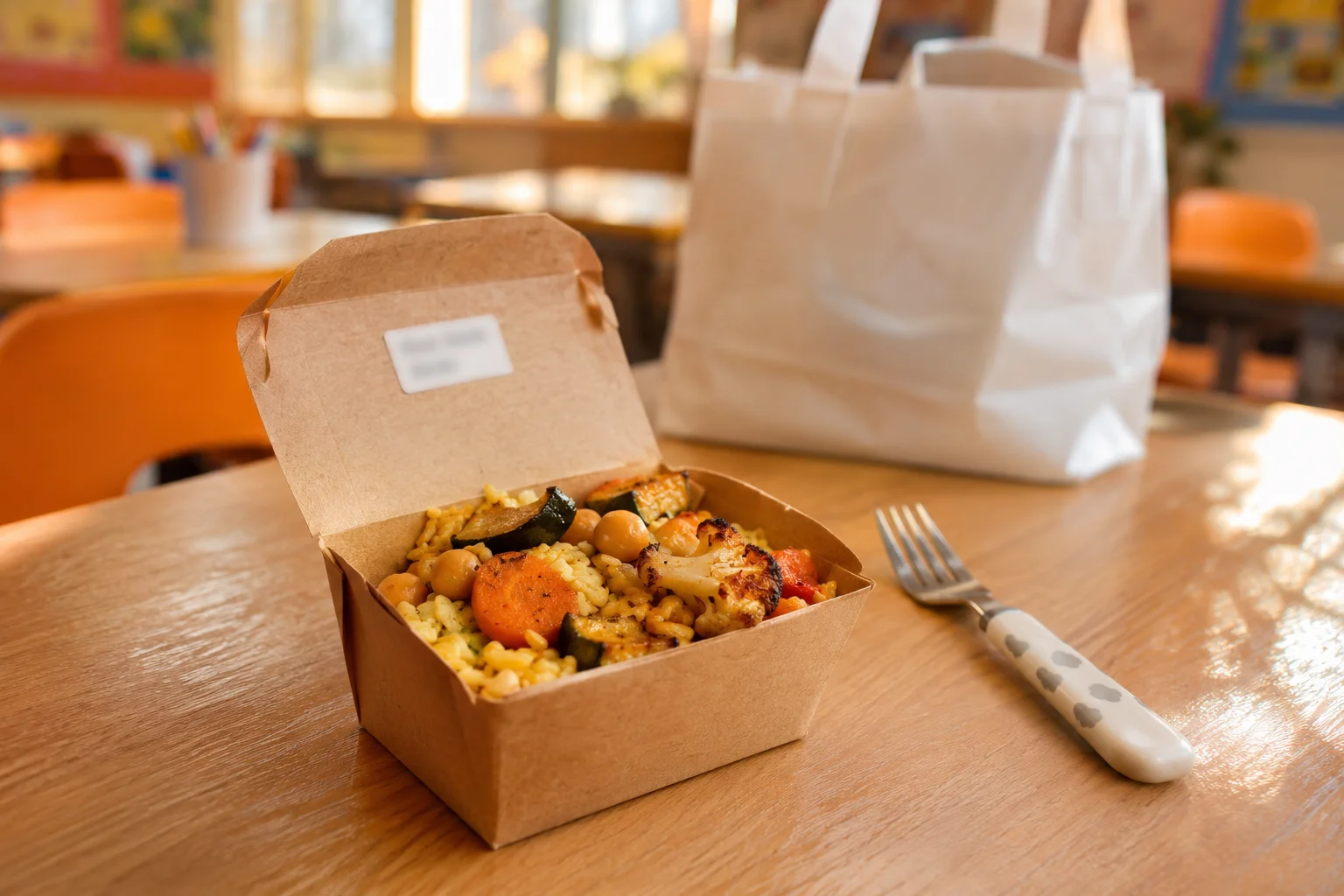
Vegetarian kids: what to look for
Open the menu for your school before you do anything else. Look at the full week, not just one day. If the vegetarian option shows up on every delivery day, you're in good shape. If it only appears once, you may want to mix hot lunch with a packed lunch on the other days. Nobody says it has to be all or nothing.
Check the description too. "Veggie" can mean different things to different kitchens. If your child is strictly vegetarian (no broth, no fish sauce, no gelatin), ask the school or PAC to confirm with the restaurant before you order. It takes one email and it saves a Wednesday-at-noon surprise.
Gluten-free kids: the part you shouldn't skip
There's a big difference between a child who feels better avoiding gluten and a child with celiac disease. For the second kid, a crumb matters. A shared fryer matters. A wrap folded on the same surface as a regular one matters.
If your child has celiac disease, don't rely on the menu label alone. Talk to your school's PAC or office first, and ask how the restaurant prepares and packs the gluten-free meal. Good restaurants will answer this kind of question happily. If you don't get a clear answer, that's your answer, and packing from home is the safer call for now. Our guide to planning gluten-free school lunch options goes deeper on what schools and vendors should be doing behind the scenes.
Tip: Vegetarian and gluten-free are dietary needs. A true allergy is a different thing, and it needs to be registered in your account.

If there's an allergy too, register it
When you sign up, you can enter your child's allergy information. If a meal you try to order contains a registered allergen, the system blocks the order and shows a warning. The allergy is also highlighted on the delivery label so the restaurant sees it while packing. All meals and prep areas are also peanut and tree nut free. We wrote more about how that works in Food Allergies and School Lunch: What Actually Keeps Kids Safe, and about the questions worth asking in Peanut-Free School Lunch? 6 Questions to Ask First.
How LunchUp helps
You order online, a day or two before delivery, from a menu you can read at your own pace. Your child's name goes on the label, the restaurant packs by classroom, and the school hands it out. If your kid is sick, you can cancel yourself and get the money back as account credit. The standard cutoff is 6 PM the day before delivery, though each school can set its own, so check yours. If you want the full picture of what happens after you tap order, here's how school hot lunch works from start to finish.
Try one delivery day first. Pick the day the menu looks best for your kid and see how it goes. If they eat it, great. If they don't, you've learned something, and you've lost one lunch, not a whole year.
Ready to Transform Your School's Lunch Program?
Join thousands of schools already using LunchUp to provide healthy, convenient meals for their students.
Explore More Resources
Related articles

Food Allergies and School Lunch: What Actually Keeps Kids Safe
Most allergy incidents at school happen in the gaps between people, not because of the food itself. Here’s what system-level allergy protection looks like, and what parents should actually be checking in their school’s lunch program.
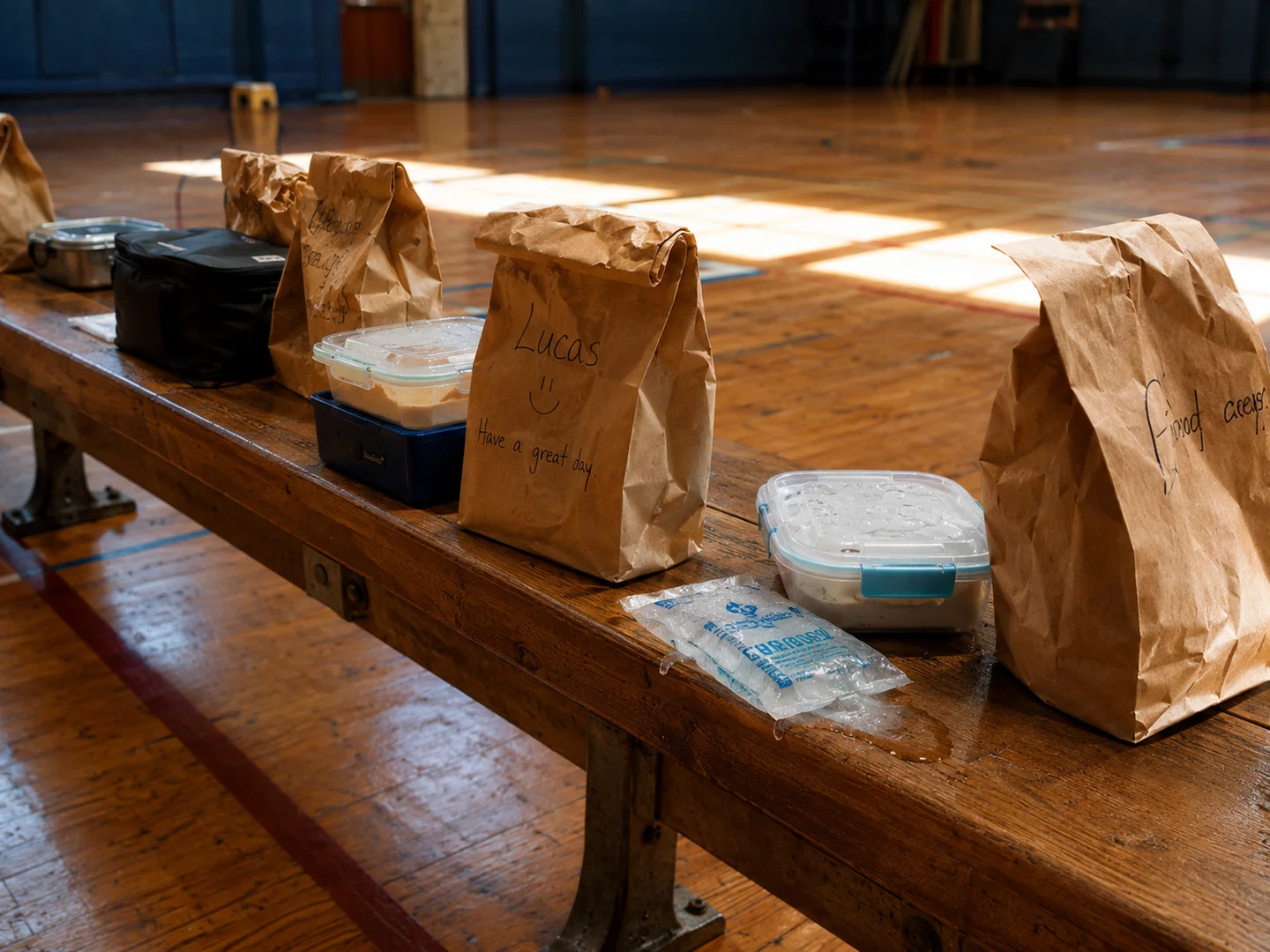
That Packed Lunch Has Been Sitting in the Heat Since 8am
Health Canada says perishable food shouldn't sit in the temperature danger zone for more than two hours. At most day camps, packed lunches have been at room temperature for four hours or more by the time kids eat them. Nobody talks about this. They should.

The Summer Camp Allergy Problem Nobody Talks About Out Loud
Allergy details can get lost between camp registration and lunch. See how ordering records and meal labels can give staff information at each handoff.