


My daughter didn’t eat her lunch that day.
Not because she didn’t like the food — she’d ordered her favourite, the butter chicken rice. She didn’t eat it because she was too busy looking at the label.
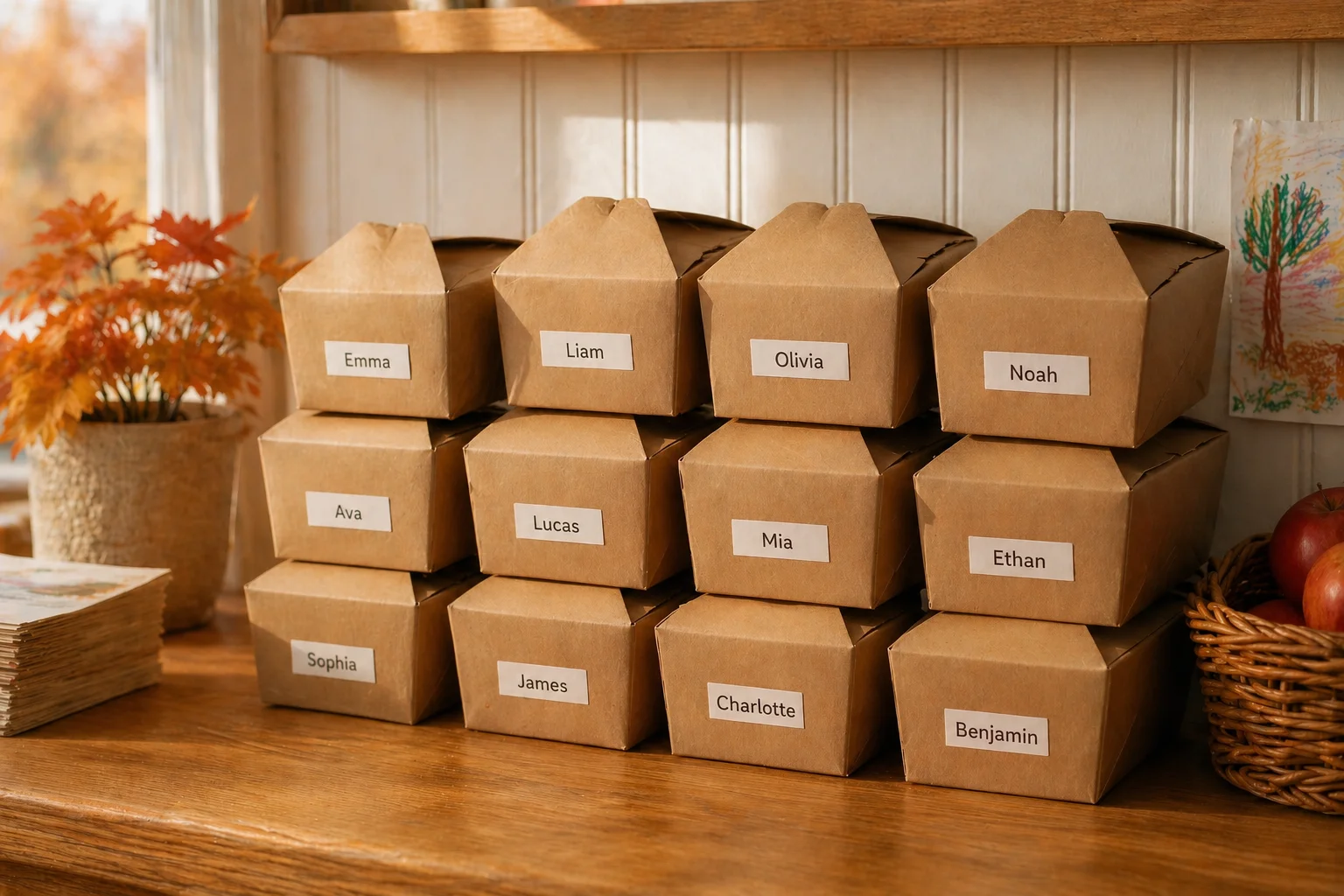
Her name. Printed on a little white sticker no bigger than a postage stamp. Stuck to the side of a small brown box, right above her classroom number.
She showed her dad at dinner that night. She told her teacher the next morning.
She kept the box.
Why a Label Matters More Than You’d Think
Hot lunch programs have been around in Canadian elementary schools for decades. The idea is simple: kids get a warm meal, parent councils raise some money, everyone moves on with their day.
But something changes when a child’s name is on the food. It stops being “school lunch” and starts being their lunch.
This sounds small. It isn’t.
For a lot of kids — especially younger ones — school can feel like a place where things just happen to them. The schedule is set, the seat is assigned, the rules are the rules. A warm meal in a box with their name printed on it is, in a quiet way, a reminder that someone thought specifically about them today.
I’ve heard versions of this story from enough parents to know it’s not just my daughter. The kid who carried his box to the office to show the principal. The girl who asked if she could order every week “because it has my name.” The seven-year-old who was shy about eating at school — until the first time a box showed up with his name on it, and suddenly lunch was something he looked forward to.
Hot Lunch Isn’t Just About Nutrition
There’s a practical side to school lunch, of course. Hot food is easier to digest than a cold sandwich sitting in a backpack since 7am. A proper meal helps with afternoon focus — kids who eat well at lunch tend to be less restless by the time the afternoon rolls around.
But that’s not why parents remember the butter chicken day.
They remember it because their kid came home with a story. Because for one lunch period, something at school had their child’s name on it, and that was worth talking about at dinner.
Schools that run well-organised hot lunch programs — where every child gets the right meal, delivered to the right classroom, without anyone going hungry and without volunteers chasing down cash envelopes — create a version of lunch that actually sticks in kids’ memories. Not the menu. The feeling.
What Makes It Work
The logistics behind a good school hot lunch program aren’t complicated, but they do need to be right.
Orders have to be placed in advance, so the kitchen knows exactly how many meals to prepare. Each meal needs to be labelled clearly — not just “butter chicken” but Emma’s butter chicken, Room 7. Bags need to be sorted by class before they reach the school, so teachers can hand them out without a second of confusion.
When those things happen, lunch runs quietly. No child gets left out. No parent gets a call. No volunteer spends her Thursday counting cash envelopes.
And somewhere in Room 7, a seven-year-old is looking at her name on a little brown box, deciding she’s going to bring it home.
A Note on Allergy Safety
One thing parents ask about more than almost anything else: what about kids with allergies?
A well-run hot lunch program handles this at the ordering stage — not at the lunch table. When a child’s allergy information is registered in the system, orders that include flagged ingredients are caught before the parent ever confirms. The delivery label highlights allergy details clearly, so the kitchen and the classroom teacher both know what they’re handing out.
All meals prepared through LunchUp’s restaurant partners are made in peanut and tree nut free environments. That’s not a footnote. It’s a requirement.
The Part Nobody Puts on the Feature List
School hot lunch is sometimes described as a convenience for parents. And yes, it is. Online ordering, automatic reminders, easy cancellations if your kid is sick — all of that makes life simpler.
But the reason families keep coming back isn’t convenience.
It’s the butter chicken. It’s the label. It’s the kid who brought her box home and kept it on her dresser for a week.
That’s harder to put on a feature list. But it’s the part that matters.
LunchUp connects Canadian elementary schools with local restaurants to bring hot, labelled lunches to kids — and fundraising dollars to parent councils, automatically. If your school is thinking about starting or improving a hot lunch program, learn how it works here.
Ready to Transform Your School's Lunch Program?
Join thousands of schools already using LunchUp to provide healthy, convenient meals for their students.